


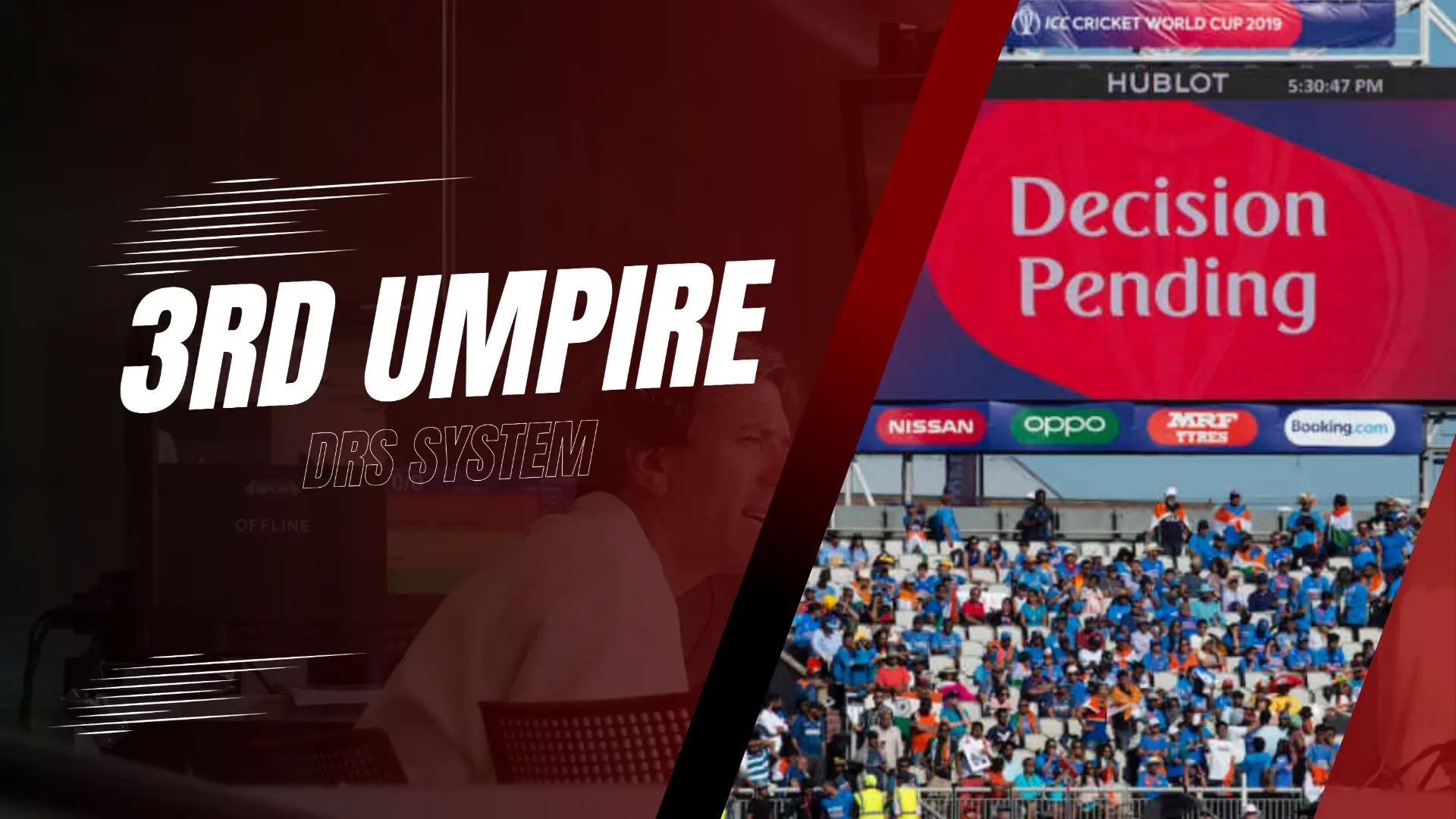
Would you believe that the third umpire in cricket has a history stretching back around 34 years?
Cricket has always evolved alongside technology, and the concept of the television umpire the third umpire was first introduced to the game back in 1992.
It was first trialled on November 14, 1992, during the first Test of the India vs South Africa series in Durban. And the first ever batsman to be given out by a third umpire’s decision? Sachin Tendulkar run out after TV replays were used to adjudicate. Karl Liebenberg holds the distinction of being the first ever third umpire in international cricket history.
In those early days, the third umpire was only called upon for close calls involving run-outs and stumpings nothing more.
From the late 1990s, the role gradually expanded. Clean catches, boundary decisions, and checking for illegal deliveries were added to the third umpire’s responsibilities.
Then around 2008, the Decision Review System (DRS) was introduced and with it, the third umpire’s workload grew significantly. It was first trialled experimentally during a Sri Lanka vs India Test series in Colombo in July 2008, before being officially adopted into cricket from November 2009.
DRS gave players the ability to challenge on-field umpire decisions and refer them upstairs to the third umpire.
Since then, a whole arsenal of technology has arrived to support the third umpire and improve the accuracy of decisions Hawk-Eye, Ball Tracking, Hot Spot, Ultra Edge, and the Snickometer among them.
What started as a tool purely for run-outs and stumpings has expanded so far that today, the third umpire is even responsible for calling front-foot no-balls in real time.
And yet even with all this technology at their disposal the third umpire has still gotten things wrong plenty of times throughout cricket history. There was one such moment in the West Indies match today too.
What are the moments like that you still remember?


